
Hokum Review (Film, 2026)

content warning: violence against women, violence against animals, grieving, death by suicide, alcohol use, drug use, smoking, foul language, hospital footage
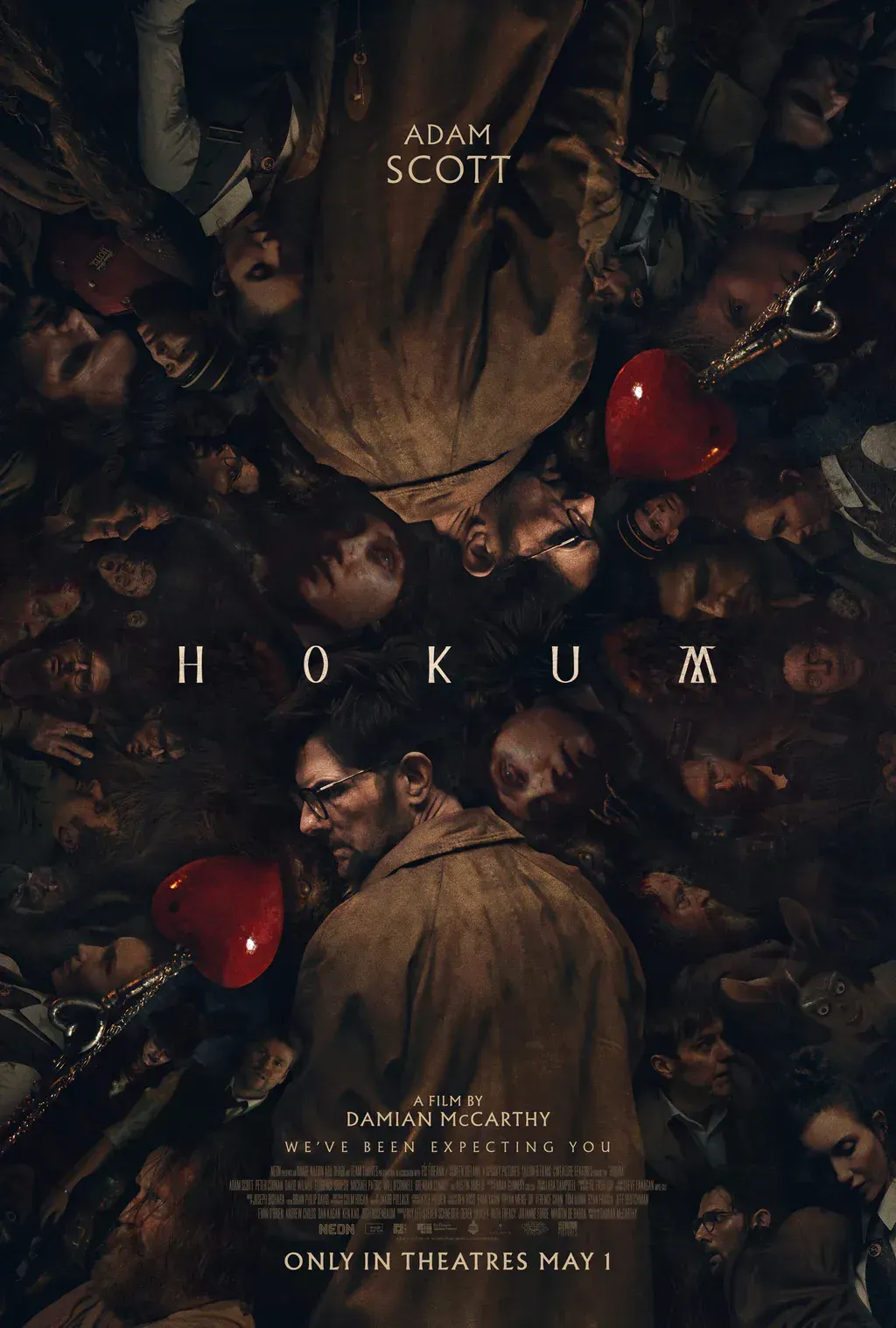
Hokum from writer/director Damian Mc Carthy (Oddity, Caveat) is a brutal, dark, brooding, borderline nihilistic film about loss, regret, guilt, and rumors. Adam Scott is phenomenal as best-selling author Ohm Bauman. He's almost done with the final draft of the final book in his best-selling adventure series and he wants to be done with it. Finished. Buried, if you will. His own depression and pessimism has hit such nihilistic depths that he thinks destroying the character beloved by the world is the only satisfying conclusion.
He decides to visit a lovely little inn in Ireland that his late parents loved. Ohm wants to see why. Yet all he sees upon arrival is more death, destruction, and silly tales of make believe--like witches in the attic and things in the woods--that lead him to a very bad choice. He survives, but not everyone who helped him at the inn makes it through the night. Now Ohm is obsessed with finding out what happened to the bartender who spent the night with him, telling him all about the locked off top floor of the inn and the witch who destroys all she encounters.
The way I've barely described anything that happens in Hokum is indicative of how strange and wonderful Mc Carthy's concept for this film is. Hokum can safely be described as a "feel bad" horror film. No one is happy. Everything is bad and seemingly getting worse. Even the wild animals have taken to eating hallucinogenic mushrooms just to feel something. It's hard times at the charming little inn getting ready to shutter for the winter season.
The interweaving of storytelling, folklore, fiction, memory, and reality is incredible. Mc Carthy knows how to balance different realities or perceptions of realities in his narratives to leave you guessing what's actually happening. It's deeply connected to that strong experimental history of Irish literature playing with form and expectation to tackle deeper emotional truths. It's a weepy tradition, and Hokum is just as likely to make you scream as it is to make you cry scene by scene.
The term "liminal" is being thrown around a lot in modern horror, but it is quickly becoming a very apt term for many indie horror projects. Liminal means a transitional, in-between state between places, phases, or senses and a small horror film about a writer jumping between memory, reality, folklore, and fiction in a confined space fits the bill. Once Ohm gains access to the top floor, he's not getting out in the same state he went in.
While the narrative is very well done, it is playing on a newer trope in modern horror--especially prevalent in indie horror and horror games: haunting as metaphor for guilt. Far too often now, the big twist in indie horror without any real justification is "oh, the mentally unwell protagonist doesn't remember killing his [insert relationship here]." And while this trope shockingly applies to multiple characters in this film, I can't say that Mc Carthy's spin on the concept isn't successful. The victims are not just objects, and the guilty haven't exactly forgotten the consequences of their actions. Mc Carthy has more to say then "gotcha" when it comes to grieving and guilt intrinsically linked in his characters' minds.
Hokum is bleak, but it doesn't feel mean. There is a distinction there. Sometimes, horror goes this dark and nihilistic just to push the boundaries; Hokum goes there to tell a story that feels far more real than anything dancing between fiction, folklore, memory, and reality has any right to.
Hokum is available to rent or purchase on all digital platforms.